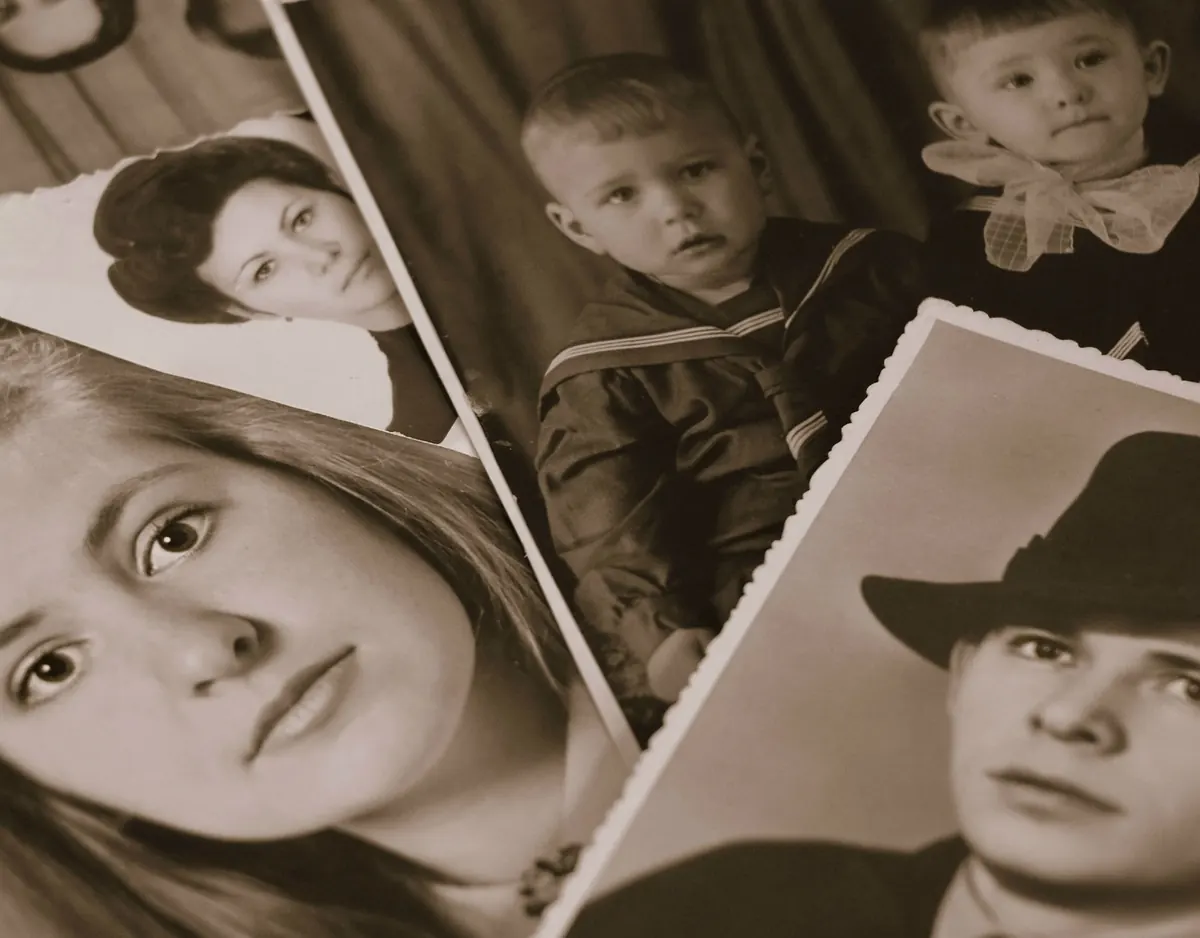
There is a particular kind of December evening — the one where the lights are on, nobody is going anywhere, and someone starts a sentence with "do you remember". Those sentences are the raw material for the best advent calendar you will ever make. Not chocolate, not tiny bottles. Twenty-four small family memories, one opened each morning, each one written down before it slips away again.
It takes an evening of gathering, an evening of writing, and about an hour of assembly. What it leaves you with is a record of who your people are, in their own small details, at the exact point in the year when everyone is most willing to sit still and listen.
Start with a shoebox, not a spreadsheet
Before you can choose twenty-four memories, you need about sixty to choose from. Spend three short sessions collecting them and do not edit anything yet.
Open the photo albums nobody opens. Read old messages. Walk through one room of the house you grew up in, in your head, and note what was on the shelves. Ask a parent or an aunt one question only: what did we eat on Christmas Eve when I was small? Then write the answer down word for word, before you decide what it means.
Keep a running list on paper. Paper is better here — you will cross things out, draw arrows, and add a name in the margin next to a memory that belongs to someone else. That margin is where the good material lives.
What makes a memory small enough to keep
A whole holiday is not a memory. A holiday is a setting. The memory is the thing inside it: the chipped bowl, the argument about the car heater, the uncle who always arrived with the same tin of biscuits.
Run each candidate through these tests:
- It fits in one sentence. If you need a timeline, it is a story, not a card.
- It has a sensory anchor. A sound, a smell, a taste, a texture, a temperature.
- Someone outside the family would not know it. That is the sign it is specific.
- It does not need footnotes. No explaining three generations to get to the point.
- You are allowed to tell it. If it belongs to someone else's private sorrow, ask before you peg it to a string across the kitchen.
So not "the summer we drove south", but "the way my grandmother cut peaches straight into the wine glass and handed it to whoever was closest". One of those could belong to any family. The other could only belong to yours.
Give the month a shape
Twenty-four cards need an order. A random shuffle works, but a loose arc works better, because December already has a rhythm you can lean on.
- Days 1 to 6: easy, warm, funny. Kitchen smells, a broken decoration, the dog and the wrapping paper. You are warming up your readers.
- Days 7 to 16: the middle of the month. School concerts, old journeys, the year someone was ill and everyone pretended not to notice.
- Days 17 to 23: the ones with weight. People who are no longer here. The last Christmas in a particular house.
- Day 24: the anchor. The memory that explains where all the others come from.
Two practical notes. Put any memory that might land hard on a day when nobody is rushing out of the door — a Sunday, usually. And leave two slots empty until mid-December: something small will happen this year that deserves to go in.
Build something you can hang up
The container matters less than the ritual of opening it, but it should be visible. A calendar in a drawer is forgotten by 4 December.
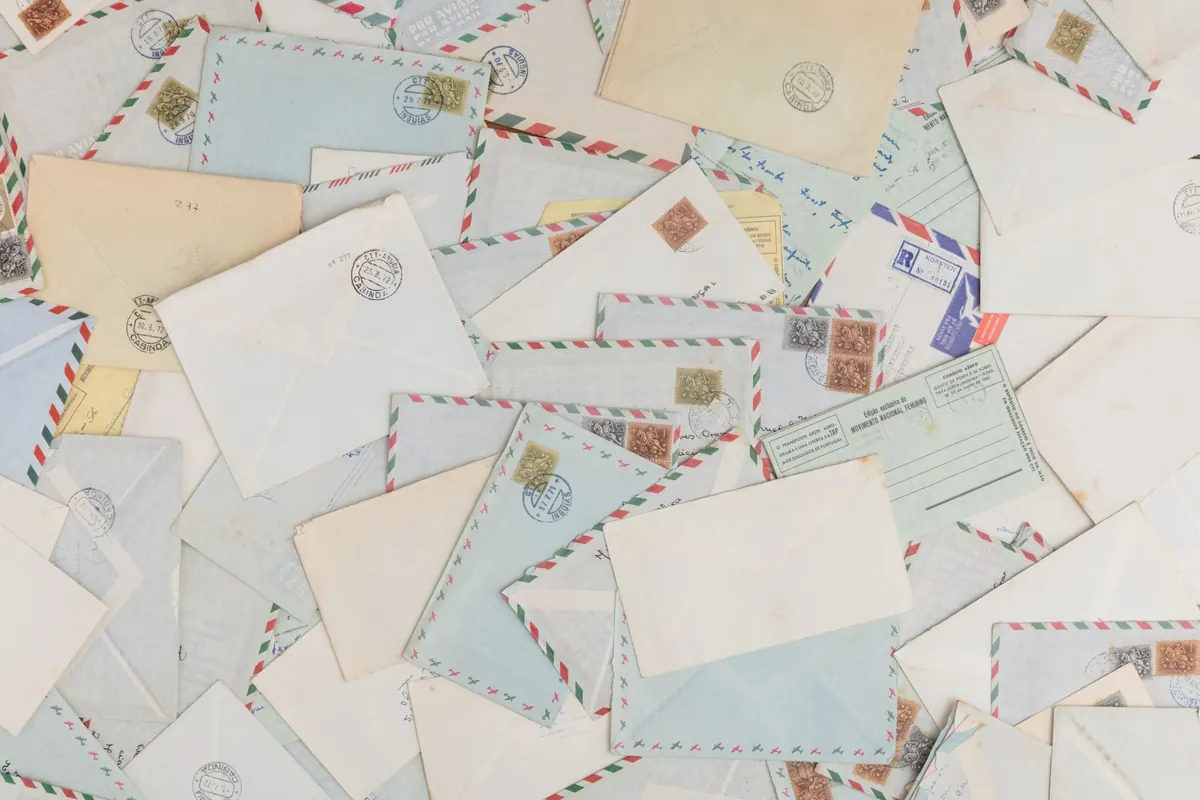
Numbered envelopes pegged along a ribbon are the simplest and the most forgiving: you can add to them, and they survive being handled every morning. A jar of folded cards drawn at breakfast works well in a small flat. Paper chains, with one line written inside each link, look good and cost almost nothing. If you have a nice box, use the box.
Write on card, not on thin paper, and use a pen. Number boldly enough that a child can find today's without help. If part of the family lives far away, send the same memory as a voice note each morning — a card read aloud is a different thing entirely from a card read silently.
Three lines are enough
You are not writing memoir. You are writing a card that will be read standing up, in a kitchen, in about forty seconds.
A good card usually has three parts. The scene: where and when, in a handful of words. The detail: the one thing only you would know. The line you would say out loud if someone asked why you kept it — and sometimes you do not need that one at all.
Christmas Eve, 1994, the flat with the gas heater. My father spent an hour getting the fire to draw and then sat in front of it with his coat still on, delighted. He never mentioned the cold again.
Notice what is missing: no summary, no lesson, no remarks about simpler times. Specific nouns do the work. Weather does the work. A time of day does the work. If a sentence starts to explain itself, cut it.
Read it aloud before it goes in
If a line makes you stumble, it is too long. If it makes you laugh or go quiet, it stays. Reading each card once, out loud, is the fastest edit you will ever do — and it tells you whether the words will hold up in front of an audience of one.
Let other people write some of them
Six or eight of the twenty-four should not be yours. Ask a sibling for one, and take what they give you without correcting it. Ring an aunt and ask for a single detail about your mother at nineteen. Record a parent reading their own card, if they are willing, and store the file somewhere you will still be able to find in ten years.
Families disagree about the past, constantly and usually with affection. If two versions of the same evening turn up, print both and put them in the calendar on consecutive days. Nobody has to win.
What to do with the cards in January
On 25 December, gather the cards, put a rubber band around them and write the year on the top one. Keep them with the decorations, in the box you will open next November. Card and ink last well if they stay dry; keep them out of a damp cellar and away from a radiator.
Next December, write twenty-four new ones. By the third year you will have a small archive: seventy-two sentences about your family that did not exist before, in handwriting that will matter to somebody eventually. Not a history, exactly. Something better — a set of proofs that these particular people were here, and that someone was paying attention.
Photo: renateko / Pixabay